
Bourbon Street Black
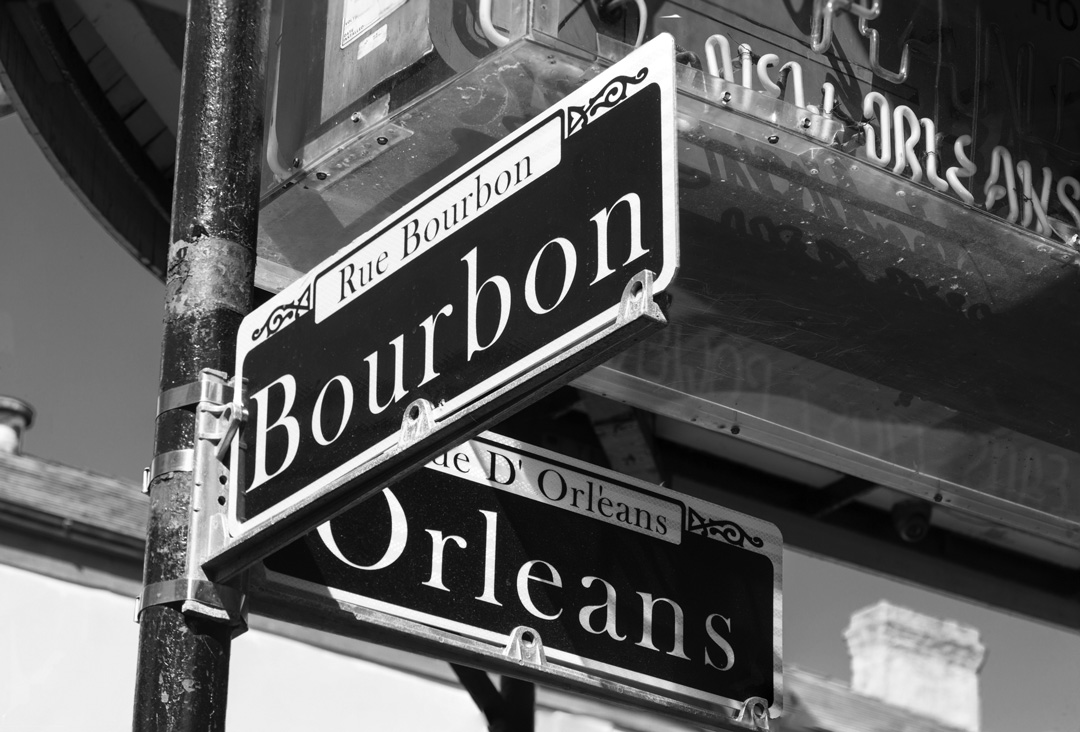
The following contains excerpts from the book, Bourbon Street Black (Buerkle/Barker).
At our music school in Dallas, Texas we believe that music is more than sound, it is relationships. One of the most important relationships a musician can have is with the history and fabric of culture his music is immersed within.
This book gives a close look at the beginnings of Jazz, showing the history of New Orleans and its influence of sociology and environment on the art-form’s formation for such jazzmen as Billy Bolden, Freddie Keppard, King Oliver, Jelly Roll Morton, and Louis Armstrong.
Although we seem to romanticize the lives of famous jazz musicians from the past, the society and environment that they lived in was filled with many deviant and sin-ridden elements. The tumultuous beginnings of Jazz evolved from an environment of greed, prostitution, witchcraft, saint-worshipping Catholicism and racial cross-breeding.
New Orleans was settled in the 1720’s by Capuchin monks, Jesuits, and Ursuline nuns, as well as a German community. “Casket Girls” from the middle and upper-middle strata of French society, who got their name from the distinctive casket-shaped trunk (containing clothes and a small dowry) given them by the French government when they agreed to colonization with intent to marry, were under the supervision of the Ursuline nuns. This began the gradual stabilization of New Orleans’s colonization. At the same time the first arrival of Negro slaves came.
Pierre Cavagnial de Rigaud de Vaudreuil, governor of Louisiana, established banquets, balls, parades and promenades during the pre-Lenten days of the Catholic Church, which later led to the famous Mardi Gras celebrations. By the 1800’s, entertainment of all kinds continued to permeate the area, as New Orleans was practically over-run with music stores. Opera became a national standard in New Orleans at this time. On the other hand, “sin had also become highly organized, and in some cases institutionalized.” Whore-houses had become plentiful with the increased traffic from the North on the Mississippi River. Upper-class versions of this became common, as well.
At our music school in Dallas, Texas we teach the value of studying both Jazz and Classical music styles.
Many people don’t realize how closely related these two styles of music are.
More than 100 years before the Civil War, an action had been taken in the French colony known as the Code Noir. This Black Code of 1724 regulated the interaction between the growing number of slaves and their owners. “It provided for the manumission, or freeing, of slaves with the consent of the owner. Miscegenation, resulting from liaisons of female slaves and their white owners had occurred widely. Because they had developed strong emotional relationships in these unions many owners began either to free the women and their children outright, or to provide for their release in their will. As free persons, the women were able to own property, and in a large number of instances were given bequests which were substantial. This was the introduction of the Creole of Color in to New Orleans life. By 1830, some of these gens de couleur had arrived at such a degree of wealth as to own cotton and sugar plantations with numerous slaves. They educated their children, as they had been educated, in France. Those who chose to remain there, attained, many of them, distinction in scientific and literary circles. In New Orleans they became musicians, merchants, and money and real estate brokers.”
The Paris/New Orleans musical connection is a fascinating study, one which we encourage students of our music school in in Dallas, Texas to glean many insights.
In 1861, the situation changed drastically with the start of the Civil War. “A war that was supposed to clip the shackles from the black man had indirectly led to a new restricted class of Negros. The change was devastation for the Creole of Color; it required the laborious task of creating a new self-image. Creole artisans were soon completely out of the skilled trades. In many instances, what had once been an avocation or a hobby became the basis for a new and usually precarious occupation. Money brokers became laborers, and merchants were transformed into musicians. Because of the extraordinary development of classical music and opera, many musicians were able to get placed in the professional orchestras. The Creoles of Color, making their adjustment to new occupations, tried to capitalize on their educational background and training whenever possible.”
This is where Classical music’s influence in Jazz became quite powerful. At our music school in Dallas, Texas we help students gain mastery of time-tested disciplines from Classical music, so they can apply them to any style, current or future.
There was, however, a divide between the well-educated Creoles of Color and the newly released black man, who introduced the un-refined music from the plantations. Over time, a synthesis began to form between the educated European musical influences with the raw ‘blues’ expressions of the slaves.
The whites would allow slaves and bond servants on their ‘free day’ to have dances in Congo Square to “release tension, and to discourage Voodoo. The bulk of activities at Congo Square involved Voodoo, with the music, dancing, and other performances being a cover for its practice. The whites were simply insensitive to its presence. New Orleans and much of the West Indies were…Catholic. What had not been realized was that the Negroes readily absorbed the Catholic Saints because they reinforced and duplicated their own older African gods. The two religions existed in harmony (at least from the black perspective) side by side. The whites were never really able to control Voodoo fully.”
Both the Civil and Spanish American War had dumped large numbers of used musical instruments into pawn shops when military and naval bands dissolved in New Orleans. The blacks, fresh off the plantation, gradually gained possession of many of these European instruments. They really didn’t have anyone to teach them or, especially to tell them the official limits of these horns, so they just blew them in their own way. Their tonalities, linked with their African rhythms, were combined to produce a new kind of music.
“All these musicians played for different types of people. In fact, there was a caste system within the Negroes themselves. The Catholics like Creole music, which was refined, and the Protestants were closer to the blues shouting and spirituals and screaming to the skies and the Lord. All the bands had a particular section of society where they entertained.”
“In the late 1800’s, New Orleans was a festive, parading, music-loving town. Its Latin, French-Spanish Catholic atmosphere had unknowingly ministered to the black population in such a way as to preserve a strong African influence in its music. Finally, the events of the Civil War and their after-effects, were creating an uneasy symbiosis between the Creole of Color with his mastery of European music methods, and the burning soul of the black African.”
At our music school in Dallas, Texas we encourage students to learn the unique relationships the exists between Classical and Jazz styles.
New Orleans, now a city of about 125,000 people, had also become the prostitution capital of America. In the district there were estimated to be between 1500 to 2200 registered prostitutes. “Elegant ‘sporting houses’ were well-run businesses, frequently involving hundreds of thousands of dollars of capital investment, often from respected landowners and merchants. The district of Storyville was primarily a collage of cabarets, whorehouses, cafes, cribs, honky-tonks, houses of assignation, ‘dance-schools,’ gambling joints, and clip-joints, all devoted to fleecing the adventurous sensualist of his money…All this required music, and lots of it.”
“For Creoles of Color, playing in Storyville meant a loss of status within their own community. Jelly Roll Morton’s grandmother kicked him out of the house when he was fifteen for playing in Storyville. She loved music, but said people who played in such places were bums.” Storyville, however, became the place that the black man and the tan musicians merged to create the environment which gave rise to musicians such as Joe Oliver (Louis Armstrong’s mentor), later named ‘King Oliver” as his later Creole Jazz Band was to captivate audiences in Chicago. It was in this environment that Jazz had come to life.
The storied history of music is rich with lessons for the modern music student. We encourage all students in our music school in Dallas, Texas to experience the joys of music-making and the study of music history.