
The Speech of the Angels
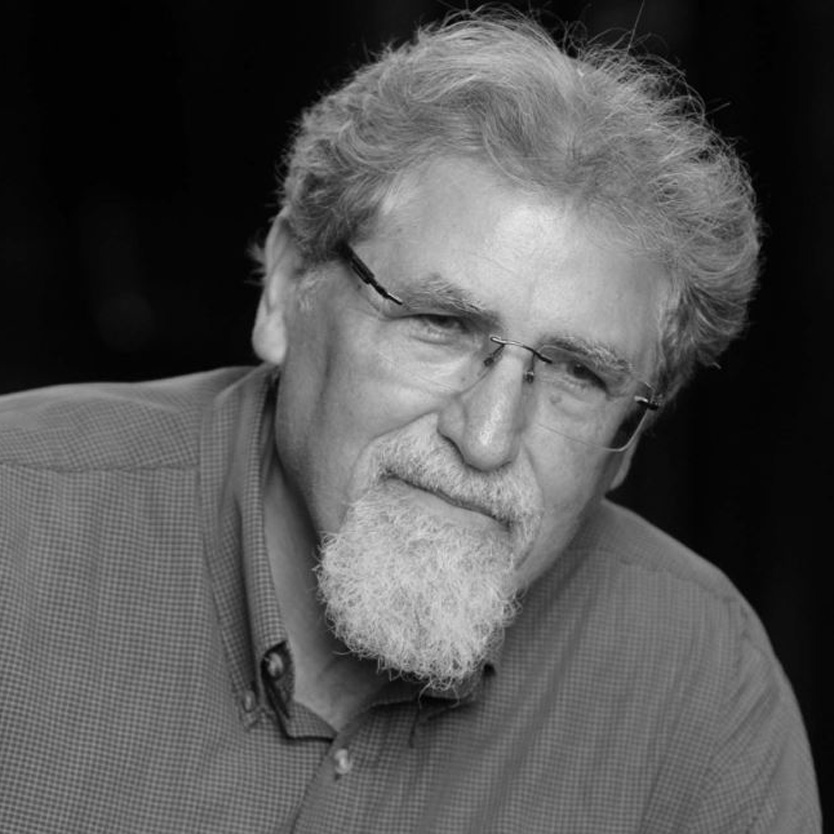
The author, a professor at Ariel University of Samaria, for his class Introduction to Music Theory, brought his materials together to form this book. He gives a broad historical perspective, ranging from ancient Hebrew and Babylonian forms of music to modern-day computer synthesis, highlighting the main historical developments throughout the history in-between.
At our music school in Dallas, Texas we believe that music is more than sound, it is relationships. The ideas expressed in this book, although dealing with music, sound, and the nature of sound, echo this sentiment regarding the need for human expression.
The author has a unique way of discussing each era of music history, focusing on things that are important not only theoretically, but also to our human experience, our relationship to beauty and truth.
Although I have studied the history of music, from antiquity through the centuries leading up to our modern day, the author presented several things I was unaware of, particularly regarding the music of ancient cultures.
The main points in this book are as follows:
- The calculations of a vibrating string, discovered and theorized by Pythagoras in the 5th Century B.C. are still valid today in computer synthesis. Pythagoras believed that these vibrations were reflections of the universal Music of the Spheres.
This is analogous to the Overtone Series and Just Intonation. At our music school in Dallas, Texas we teach students the various common tuning systems used in music and how they inter-relate in various alpplications.
- The macro-universe can be understood by the micro-elements we have at our disposal through music. The author quotes William Blake:
To see a world in a grain of sand,
And a heaven in a wild flower;
Hold infinity in the palm of your hand
And Eternity in an hour.
- Regarding the subject of Intonation, the Pythagorean comma reveals a kind of infinity in music. Building a scale based upon the subdivisions of a string, after completing the notes comprising an octave, there is a slight discrepancy, represented proportionately as 80:81. This means that creating scales is an endless spiral.
I have delved into the subject of how the Overtone Series can be used to frame a unified system of composition, to include tempo, rhythm, harmony, diatonicism, chromaticism, microtonality, and spectralism all within one construct. (See: Integrated Frequency) At our music school in Dallas, Texas we teach students in these forefront ideas.
- The philosopher Plato divided rhythm into two categories: harmos and rhythmus (duration and stress) and early Greek theorists defined rhythm into the three categories of Poiesies– the rhythm of speech and poetry, Mousike – the rhythm of song and playing instruments, and Orchesis – the rhythm of physical movement and dance.
A contemporary understanding of music is that of melody, harmony, and rhythm. These can correlate to intention, emotion, and movement. As frequency is perceived by various aspects of our nature, we can participate in music at various levels of our awareness.
There is a common phrase, “Music is the universal language.” There are many styles of music, and each have their own unique vocabularies of communication, so how can they all be unified?
Perhaps, another way of thinking of it is in a particular scientific study done to highlight the unique and complex muscles in our faces, as they relate to our emotions. It has been studied that regardless of culture, ethnicity, or creed, the expressions generated on the face of humans universally reflects certain thoughts and emotions (anger, sadness, fear, joy, etc.). What this means is that we universally communicate through our emotions. A better way of saying it, then, is not that music is the universal language, but rather, emotion is the universal language.
We can intuitive pick up on the meaning of what is being communicated on a visceral, emotional level, regardless of the cultural or intellectual constraints.
At our music school in Dallas, Texas we teach students the value of authentic emotional connection with the music and the audience.
- The author’s discussion of Melody was interesting, as he described it as, “not so much about a succession of tones, but rather about the energy between the tones. It is an invisible force drawing them together and binding them into cohesion. “If Time is tone’s horizontal dimension, the moment is its vertical axis…Melody is the ultimate organizer; tones drawn mysteriously together in linear time and vertical space.”
J.S. Bach was a great proponent of teaching his students the value of learning to play and compose in the cantabile style (i.e. ‘singing style’). He very overtly prioritized linear, horizontal lines and patterns over harmonic vertical ones. To analyze Bach with a predominantly horizontal approach would be a mistake.
We teach students at our music school in Dallas, Texas the value of playing and composing with a strong sense of ‘the line.’
The study of ancient musical sources from around the world shows two different approaches to music. One is linear and with story-telling direction. The other is non-linear and textural, as the author wrote, “It gives the impression…of a car driving full speed in neutral.” This is synonymous with non-linear expressions (moments of experience, rather than logical exposition). Oliver Messiaen sought to create a sense of timelessness in his works by using, what he called ‘non-retrogradable rhythms.’
Continuing to study music and art history is important to maintaining perspective. It is all too easy to get caught up in what is popular in contemporary culture, the tyranny of the immediate. Maintaining objectivity can only be attained by continued study of history.
Although, at our music school in Dallas, Texas we teach in a variety of styles, we prioritize musical disciplines that are centuries old, ones that are foundational to all musical expression. This gives the student a strong and comprehensive basis on which to pursue any artistic direction they desire.
The author concludes the book, after discussing the role of electronically derived computer music by asking the question, ‘Is it truly human expression?’ Pursuing the answer to this question is paramount in the direction of authentic musical expression.